The Myth of the Unchanging Wedding Custom
The myth of the unchanging wedding custom can make family planning tense. Learn how to adapt inherited rituals without losing the meaning they hold.
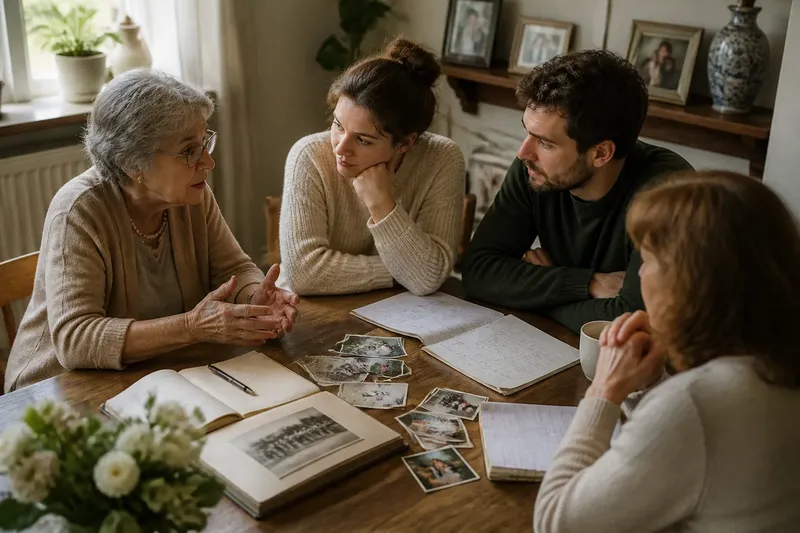
A grandmother asks why the wedding will not include the family’s usual blessing; the couple had assumed the ceremony would be simple, while relatives thought the custom was settled. The myth of the unchanging wedding custom turns a practical disagreement into a test of loyalty. In reality, traditions are carried by people, and people adjust them as families, beliefs and circumstances change.
That does not make inherited practices empty or disposable. It means their meaning is often more durable than their exact wording, timing or form. When a custom causes friction, the useful question is not simply “Is this ancient?” but “What does it mean to the people who want it, and what could preserve that meaning now?”
When history becomes a rule
Family accounts often compress a changing practice into a single story: “We have always done it this way.” A ritual may have been repeated for several generations, but repetition alone does not establish that every detail is old, universal or obligatory. A custom can gather new significance each time someone explains it to the next person.
Descriptions such as “traditional” or “ancient” can also conceal differences between households. One branch of a family may regard a particular garment, blessing or procession as essential; another may recognise the practice but remember it differently. Neither account necessarily cancels the other.
Start by asking who has taken part, what they remember, and which parts matter most to them. Treat those memories as perspectives rather than a vote on whose version is authentic.
When stories conflict
Two relatives may describe the same wedding custom in incompatible ways. One remembers a formal blessing before the ceremony; another recalls a brief family exchange afterwards. The disagreement can arise because the practice varied by household, because memories preserve different moments, or because details changed over time.
Trying to settle the matter with a definitive family history can make the argument harder. Instead, separate what people recall from what the couple is deciding. Ask each person to describe the custom they experienced and the feeling or purpose they associate with it.
Say a couple hears conflicting accounts of a family ribbon ceremony. One relative remembers it as a public gesture, while another recalls it as a private exchange. They might ask both what the ribbon represents, then choose a form that honours the shared meaning without pretending the memories match.
Keep the family history open where the evidence is uncertain; make the present-day choice clear.
When symbolism feels unclear
A custom can be repeated long after its original explanation has faded. Participants may know where to stand or what to say but feel unsure why they are doing it. That uncertainty can make a ritual seem like an arbitrary demand, especially to someone marrying into the family.
Ask the person who values the practice what it expresses for them now. Their answer may be affection, welcome, continuity, faith or remembrance. The current meaning may be more useful than a claim about the custom’s precise origin, which family members may not be able to verify.
If the meaning matters but the inherited wording does not, consider a small adaptation: explain the ritual before it begins, invite a different relative to lead it, or use words that reflect the couple’s beliefs. Do not assign a meaning on someone else’s behalf; ask first.
When relatives feel excluded
Wedding customs can make people feel included, but they can also expose who is expected to participate. A ritual may assume a particular family structure, religious commitment, gender role or relationship with a parent. Someone who does not fit that assumption may experience the custom as a public reminder of their distance from the family.
Look closely at who is named, who performs the action and who is left watching. If the practice depends on a role that no longer fits, discuss whether another person can take it, whether the wording can be broadened, or whether the ritual should be omitted. The person whose circumstances are involved should have a say, not merely be treated as a problem to accommodate.
For instance, imagine a couple whose customary escort role presumes two available parents. They could ask a trusted relative or friend to accompany one partner, walk together, or choose another way to mark their entrance. The point is to decide deliberately rather than make an absent or complicated family relationship the ceremony’s unspoken subject.
When the ritual does not fit
Work schedules, travel, disability, cost, faith and the shape of a family can all make a familiar practice difficult to carry out. A custom that once happened at home may not suit a venue or the people taking part. Treating every practical obstacle as a lack of respect can turn a shared celebration into an endurance test.
First identify the part that is causing difficulty. Is it the timing, the location, the physical action, the number of participants, or the expectation that someone must perform a role? Then distinguish the element people cherish from the arrangement that makes it hard to include.
- Ask what the custom is meant to express.
- Identify the people who want to take part and those affected by it.
- Separate its central gesture from optional details.
- Offer an alternative that preserves the meaning without imposing the same obstacle.
- Tell participants what will happen and why, so no one is surprised at the ceremony.
For details governed by religious practice, venue rules or a specialist’s instructions, check with the relevant authority once before settling the plan.
How can a custom change?
Does changing a ritual disrespect the family?
Not necessarily. A change can show care for the people involved while retaining the custom’s central meaning. Explain the decision plainly and acknowledge what the original form has meant to relatives.
How do we choose which parts to keep?
Ask the people who value the ritual to name its essential gesture or message, then compare that with what the couple can take part in sincerely. Keep what fits and alter or leave out details that do not.
What if relatives disagree about the origin?
Do not present an uncertain family story as settled fact. You can say that relatives remember the practice differently and focus the ceremony on the meaning the couple chooses to carry forward.
Should every family member have a role?
No ritual can represent every relationship equally, and assigning roles just to avoid hurt can create new pressure. Consider who would welcome a part, who would rather not take one, and whether the ceremony can make room without making participation compulsory.
When the choice feels personal
Disagreement often sharpens when a custom stands for more than its visible action. A relative may hear an edited blessing as rejection; a couple may hear insistence as a refusal to recognise their beliefs. Naming that underlying concern can lower the temperature without requiring either side to surrender its view.
Use specific language: “We want to keep the family welcome, but we need wording that includes both of us.” Avoid declaring that a relative’s version is outdated or that the couple’s choice is the only respectful one. A short conversation before the wedding is usually kinder than a public debate during it.
If a discussion becomes coercive or distressing, it is reasonable to pause it and return to the decision with support from a trusted mediator, celebrant or faith leader. The aim is not to win a contest over who owns tradition; it is to make a choice the couple can stand behind.
Keep the meaning visible
Adaptation works best when it is not hidden. A brief explanation in the programme or a sentence from the person leading the ceremony can tell guests why a familiar ritual has changed. That context helps relatives recognise continuity, while allowing the couple to make the practice their own.
Choose the words carefully: describe what the custom means to this family now, rather than claiming that every family has always understood it in the same way. If the ritual is private, a direct conversation with close relatives may be better than a public explanation.
The myth of the unchanging wedding custom can make any adjustment look like a break with the past. In practice, a wedding can honour inherited meaning without copying every inherited detail. Ask what the custom gives the people who cherish it, then build a form that lets the couple and their guests take part with understanding.