Before the Printed Calendar: Seasonal Markers in Community Life
Seasonal markers in community life connect local weather, shared work and observances, helping you describe how a familiar part of the year takes shape.
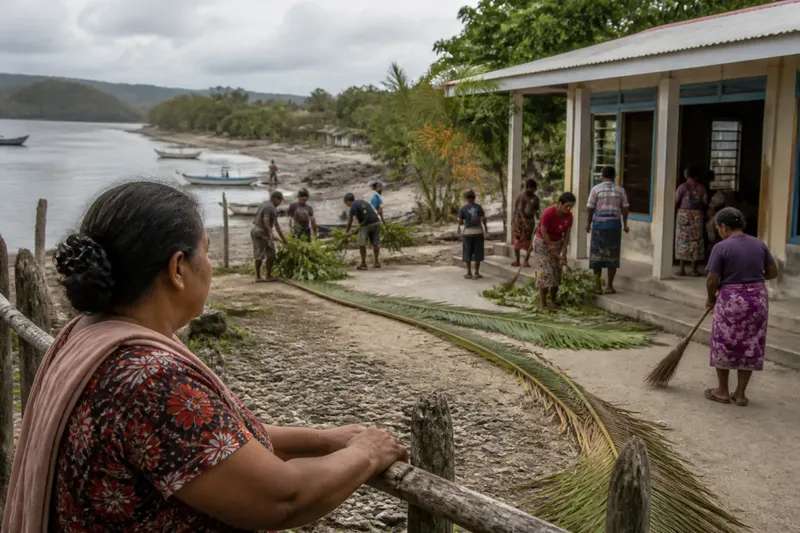
A neighbour sees the river level fall as the community hall is readied for a familiar gathering. Seasonal markers in community life connect shared observances with work, weather and the places people inhabit, though the signs and customs differ from one community to another.
Local seasonal markers
A seasonal marker is a recurring sign or activity that helps people recognise a change in the year. It might be the return of migratory birds, a shared path-clearing day before a rainy period, or a gathering held after local harvest work.
Markers can be formal or informal. A religious observance may follow a defined calendar, while a neighbourhood may begin preparations when conditions make them timely. These patterns can coexist: a fixed date gives people a shared appointment, while practical work responds to local circumstances.
The word “season” does not mean the same thing everywhere. A community’s year may turn around wet and dry periods, daylight, grazing conditions, planting cycles, school terms or a combination of these. A marker makes sense within that local pattern, not as a universal division of time.
Work through the year
Recurring work gives time a practical outline. Preparing soil, moving animals, gathering crops, preserving food, repairing boats or storing fuel can return in a recognisable order. People anticipate these tasks because they depend on recurring needs and conditions, even when their timing shifts.
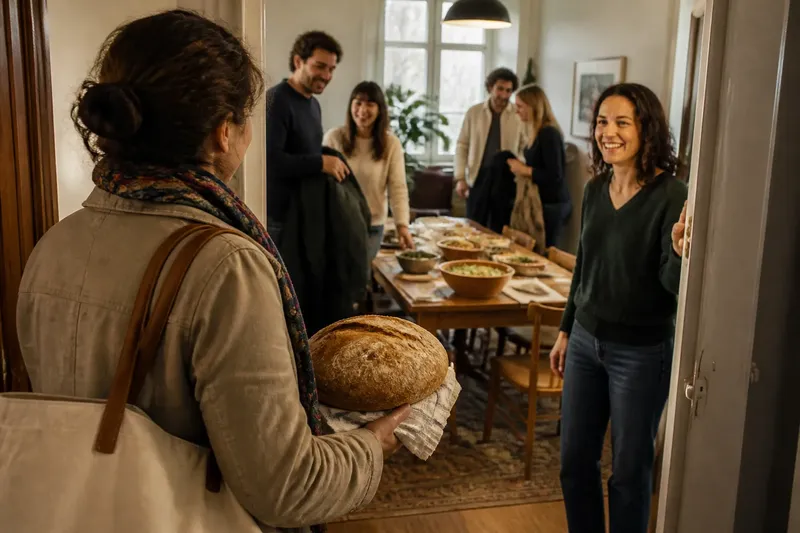
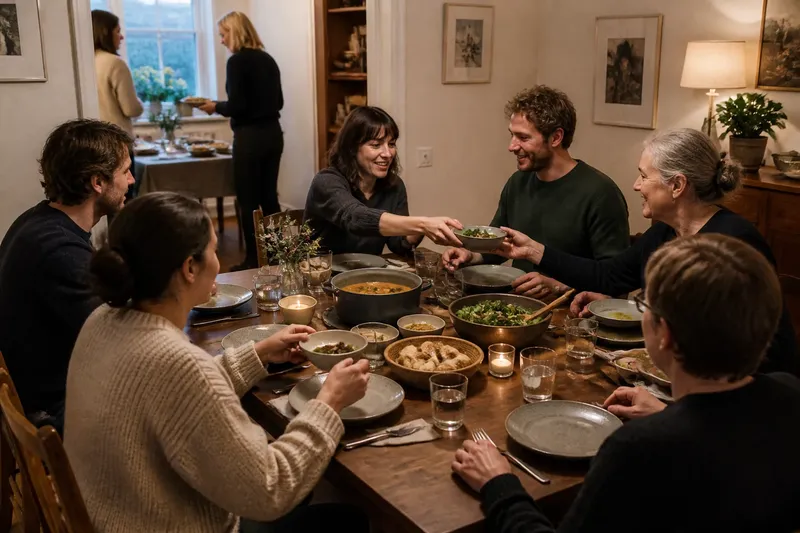
Work also creates reasons to coordinate. A task that is difficult to do alone may bring households together, and the end of a demanding period may prompt a shared meal, dance or observance. Practical activity and social occasions can form part of the same seasonal rhythm.
Imagine, purely as an invented possibility, a coastal settlement where residents clear a shared landing place after rough weather. If calmer conditions follow, neighbours might find the work easier to organise and hold a gathering to mark a renewed period of local travel. This scenario illustrates one possible connection between weather, collective maintenance and a familiar occasion; it makes no claim about the customs of any actual coastal community.
Recurring observances
Observances help people recognise a shared point in the year. They may honour religious meanings, local history, seasonal transitions or relationships between generations. Repetition gives participants a familiar structure, while food, music, clothing and leadership may change.
A date can coordinate people who no longer share daily routines. Family members may live elsewhere, or work may have moved away from local land and trade. An annual observance can still give people a reason to return, reconnect or pass on knowledge, although participation can vary.
A recurring event is not necessarily an unchanged custom. Communities adapt practices as circumstances, beliefs and resources shift. A marker can remain meaningful in a new form, or lose importance as people find other ways to organise shared life.
Who sets the timing?
Timing may be shaped by religious leaders, community organisers, families, employers, local councils or people whose work depends on environmental conditions. A formal calendar can settle a date, while weather-sensitive tasks may still follow local judgement. Where systems overlap, people often make arrangements to take part in more than one.
Calendars organise time according to particular conventions; a date in one system may not align neatly with a seasonal cue or another calendar. Treating one printed calendar as universal can hide local knowledge about when a task or observance is appropriate.
To understand a local marker, ask who recognises it, what signals its arrival and whether those signals have changed. Answers may differ by age, occupation, faith or place within the same community.
Changing seasonal cues
When weather becomes less predictable, a marker tied to a natural event may arrive earlier, later or less reliably. Related work can become harder to schedule, and a gathering based on it may need a flexible date. Some communities may retain a set observance while adjusting practical preparations.
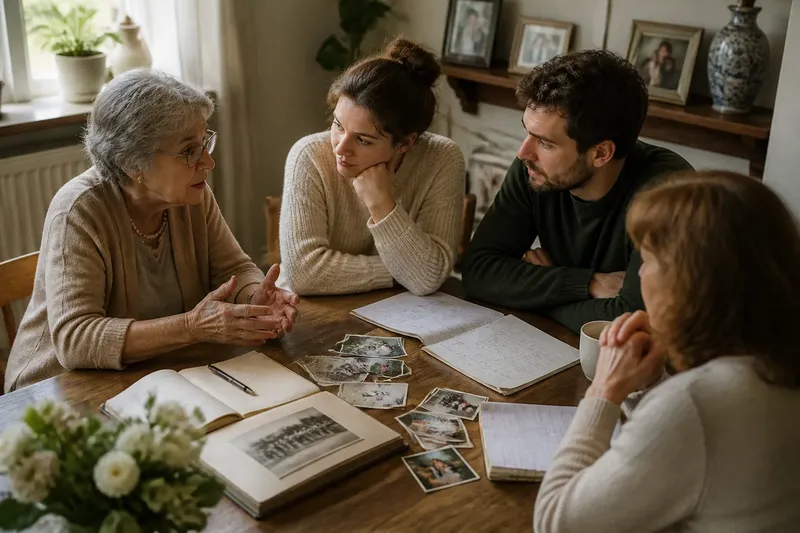
Changes in livelihood also affect seasonal customs. If fewer people undertake a traditional task, the knowledge connected with it may be carried by a smaller group. Recording how participants describe the task, sharing skills and making room for younger people can keep its meaning visible without requiring the practice to remain unchanged.
A community may choose a new marker when older routines no longer fit. That change does not necessarily mean a tradition has disappeared; it may reflect altered work, settlement or social needs.
Reading a local marker
Begin with the people who take part rather than assuming a date or custom has a single explanation. Listen for practical and symbolic meanings together: someone may describe a task as necessary work, a family memory and a sign of seasonal change.
- Observe which event, condition or task participants name as a sign that the season is turning. If accounts identify a shared cue, describe that cue; if they differ, note the difference rather than choosing one version.
- Ask who decides when preparations begin. If participants describe a shared decision, explain how it is made; if one person or group sets the timing, identify that role without implying everyone agrees.
- Check which activities follow a fixed date and which respond to local conditions. If both are present, distinguish the observance from the practical work; if neither pattern is clear, ask participants how timing is chosen.
- Ask what has changed and what participants still consider essential. If they name continuing elements, describe those alongside adaptations; if they disagree, preserve the differing views.
- Listen for differences between age groups, occupations, faiths or neighbourhoods. If accounts vary, attribute each view to its speakers; if they broadly align, describe that shared understanding without calling it universal.
- Check whether the marker has a local name and how participants explain it. If a name is shared, use it with its explanation; if meanings vary, give the relevant versions rather than imposing a single gloss.
These observations help distinguish a living practice from a tidy description imposed from outside. They also clarify why the event matters to the people who maintain it.
Why do dates and seasons differ?
Does every community use the same four seasons?
No. Some communities divide the year by temperature or daylight; others emphasise rainfall, animal movement, planting conditions or local cycles. A familiar four-season scheme may not describe those patterns well.
Can an observance have a fixed date and still be seasonal?
Yes. A fixed date can organise an observance even when weather or work varies. The event may mark a religious or cultural point in the year while practical activities around it adjust to local conditions.
What if a seasonal sign arrives at a different time?
People may adjust related work, retain the customary date for an observance, or use both approaches for different purposes. The choice belongs to the community and can reflect both the marker’s meaning and the task’s practical needs.
Are seasonal customs only agricultural?
No. Farming can shape a seasonal calendar, but fishing, herding, travel, religious observance, community care and changes in weather or daylight can also matter. Understand a seasonal marker through the activities and meanings local people connect to it.
Describing seasonal markers
Seasonal markers in community life reveal relationships among people, place and recurring needs, rather than a single calendar everyone follows. When describing one, preserve local names and explain what participants watch for, what they do in response and how the practice is changing.
If accounts describe both a set date and a weather-dependent task, keep those details distinct: the date can organise the observance while local conditions shape the work around it.