A First Visit to a Gathering Where You Know No One
A first visit to a gathering where you know no one feels easier with a simple plan: learn the format, find a comfortable place and join at your pace.
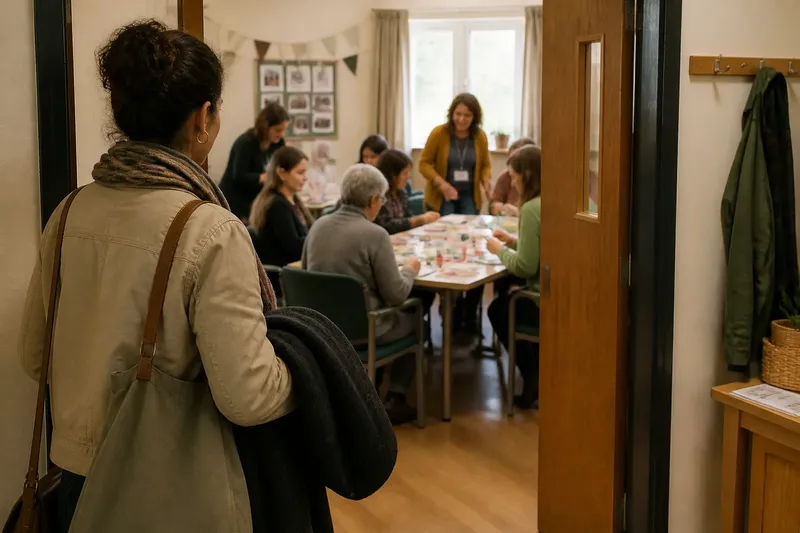
You pause outside a community hall, hearing conversation through the open door while your coat slips from your arm. For a first visit to a gathering where you know no one, a little preparation can make the first few minutes easier without obliging you to mingle straight away.
Choose a simple aim: understand what is happening, find a comfortable place and decide whether you want to take part. A meeting, shared meal, dance and informal reception each have their own rhythm, so let the event’s purpose shape your first move.
Prepare before leaving
Read the invitation for the address, start time, dress guidance, activities and any request to reply. Look for clues about whether people will be seated, listening to a speaker, sharing food or joining an organised activity.
If a practical detail is missing, send the organiser one specific question: “I’m coming for the first time; is there anything I should bring?” For a meal, you might ask about the format; for a craft session, check whether materials are provided.
Save the venue details, note the organiser’s name and choose clothing that suits the setting and any stated request. Decide in advance when you might reassess whether to stay; that gives you an easy boundary without committing you to leave at a particular moment.
Find a comfortable place
At the entrance, look for a clear place to pause that does not block a doorway, serving table or activity. If a welcome desk or sign-in sheet is provided, use it; otherwise, take a moment to see whether the event has a marked seating area or an obvious opening activity.
- If you see a welcome desk or sign-in sheet: Check whether names are requested and follow the posted instructions; if there is no sign-in, move to a permitted place to settle rather than searching for a form.
- If chairs face a speaker or screen: Choose an open seat near the edge if you prefer to observe; if seats are reserved or marked, ask before taking one.
- If materials are set out on tables: Read any instructions or ask the activity leader whether to choose a place; if the group is already working, wait for a pause before joining.
- If food is being served: Check for a queue, serving order or shared-dish arrangement; if none is clear, ask someone who is free where to begin.
- If the room feels crowded or noisy: Look for a quiet, permitted spot where you can still follow the event; if none is available and you feel uncomfortable, step outside or leave.
- If a conversation seems private or focused: Give the group space and wait for an opening; if no opening comes, choose another place or attend to the activity instead.
Say you arrive at a neighbourhood craft evening and see people seated around tables, with paper, scissors and glue in the centre. You ask the organiser, “Should newcomers choose a table or wait for instructions?” They explain that any open seat is available and demonstrate the activity; you take an empty chair and can begin without interrupting a group already working.
Join at your own pace
You do not need to introduce yourself to the whole room. A brief greeting to the organiser or a nearby person is enough to open a conversation: “Hello, I’m Sam. Is this your first time at this group?”
Use the event itself as an easy subject. Ask how an activity works, where to put your coat or when the meal begins, and keep personal questions for a later conversation. If someone returns to a task or gives short replies, let the exchange end without pressing for more.
If the gathering is structured, listen for instructions before joining in. At a discussion, wait for a suitable pause; at a game or movement activity, ask the person leading it how newcomers can take part. A short period of watching can help you understand what to do without placing you in the middle of the room.
Questions at the door?
What if I arrive late?
Enter quietly and choose an available place without crossing in front of a speaker or disrupting an activity. Ask for an explanation at a natural pause, rather than expecting someone to stop what they are doing.
What if I cannot find the organiser?
Check for a notice, programme or volunteer wearing a name badge, then ask one practical question. If no one is free, settle somewhere appropriate and follow the event’s visible instructions.
How long should I stay?
Stay for as long as you feel comfortable and can take part in the way you intended. If you need to leave, wait for a pause, thank the organiser if they are available and go without giving a detailed reason.
What if I need a quiet break?
Use a designated quiet area or step outside if the venue allows it. If you feel unwell or unsafe, leave and contact someone you trust or the appropriate local service.
Leave with a clear plan
When you decide to go, avoid interrupting a speech, performance or focused activity. Thank the organiser or a person who helped you, and follow any sign-out or tidying arrangement stated for the event.
Afterwards, note what would make another visit easier: checking the start time, bringing a particular item or choosing a quieter part of the room. The main search phrase, first visit to a gathering where you know no one, need not mean a test of sociability; it can simply describe a chance to learn the format and choose how much to join in.
If you would like to return, ask whether newcomers are welcome at the next gathering and where to find details. That gives you a practical next step and lets you decide in your own time.